Why Romance Needs Heroines in Their Forties and Fifties
There's a moment for women that happens around forty. You go looking for yourself in a story and you can’t find her.
She's not the heroine anymore. You'll find her at the edges of the book, if she's there at all. She's somebody's mother. Somebody's boss. The wise friend who dispenses advice and has no life of her own. Occasionally the villain, because a woman with power and no chaperone still reads as dangerous. What she almost never gets to be is the one at the center. She’s never the one who is desired, who desires or who gets the whole aching arc of falling in love.
Fiction, and romance in particular, has a quiet habit of retiring women right around the age they get interesting. I write books precisely to argue with that habit. Here’s why that matters.
The lie we absorb without noticing
Start with what the absence teaches. When a whole category of story stops centering women after forty, it isn't neutral. It's instruction. It tells every reader in her forties and fifties, gently and relentlessly, that her chapter of longing and possibility is behind her. That love stories are for other, younger people now. That she can be useful, or she can be background, but the spotlight belongs to someone with fewer years on her.
Readers absorb that. I know because they tell me. The most common message I get isn't about plot or spice or which couple is anyone's favorite. It's some version of, I've never seen myself in one of these before. Women write to me a little stunned, sometimes a little emotional, because a heroine their own age got to be wanted on the page. That reaction is beautiful. It’s also a quiet indicment of how inclusion in these kind of stories seems so rare that it can make a grown woman emotional.
That's the first reason these heroines are necessary. Representation isn't decoration. What we leave out of our stories is a claim about who gets to have a story at all.
The better reason: they make better books
But I don't only argue for older heroines out of fairness. I argue for them because they are, quite frankly, richer to write and more interesting to read.
A woman in her fifties walks onto the page already carrying a life. She has buried people. She has raised children or chosen not to, built things and lost them, loved before and survived the ending of it. She knows who she is, which means she also knows exactly what she stands to lose. When a character like that decides to risk her heart again, it costs her something a twenty-five-year-old simply cannot spend, because she doesn't have it yet.
That's not a limitation. That's the good stuff. Stakes come from history, and history is the one thing an older heroine has in abundance. Give me a woman who has every reason to keep her walls up and let me watch her choose, with her eyes wide open, to lower them anyway. There is no braver arc in romance. She isn't naive about love. She knows precisely how badly it can go and she will still reach for it. That's not a smaller story than a young woman's first love. It's a larger one.
The desire reads differently, too, and better. A midlife heroine's wanting isn't a girl discovering herself. It's a woman who knows her own body and mind and has decided, on purpose, that she is not finished. That self-possession is the appeal I think my readers come for.
What I'm doing about it
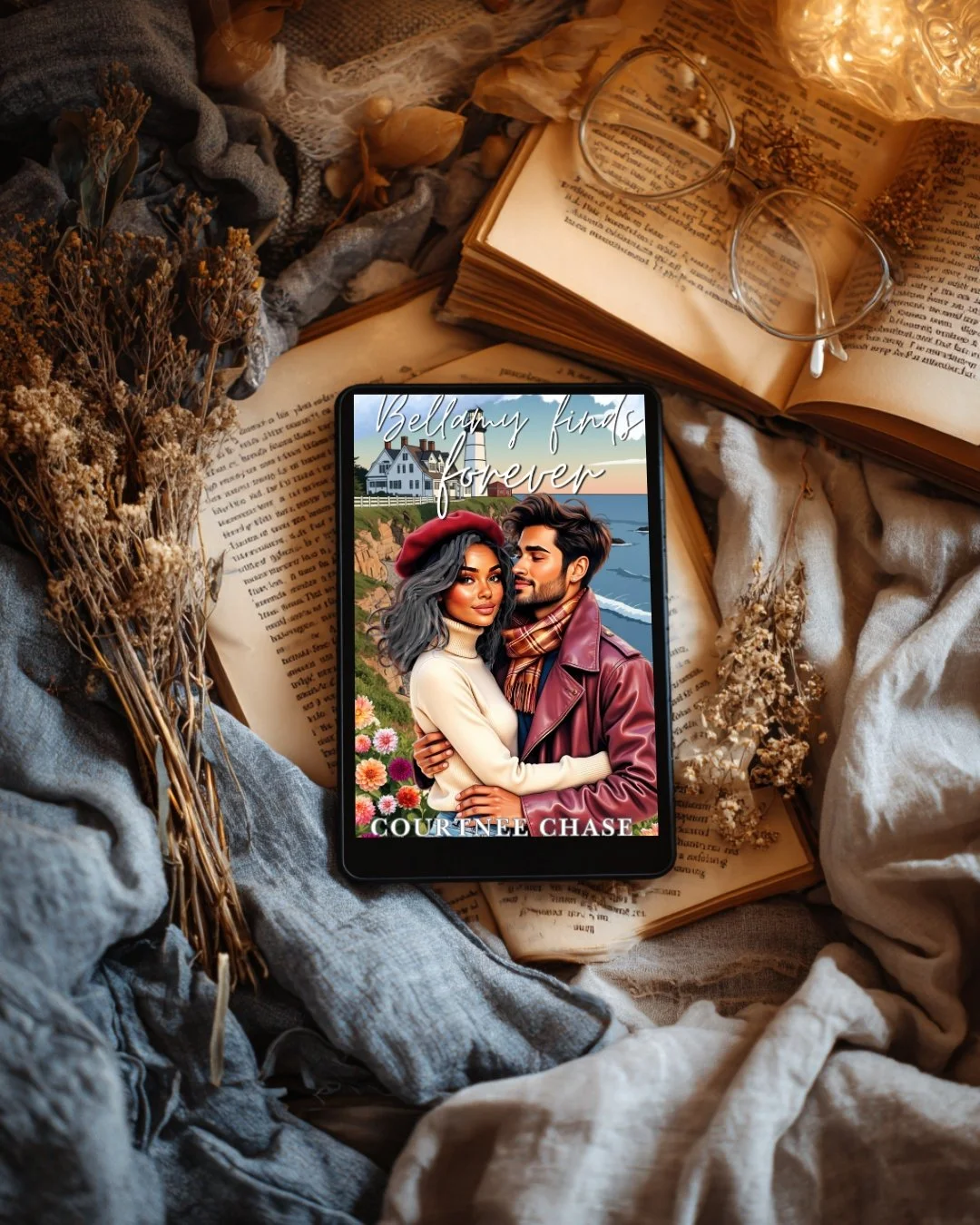
My Hudson Harbor women are in their forties and fifties on purpose. Bellamy is fifty-one, widowed, and, second-chance love story she was told she'd aged out of. Merritt before her. Evie coming this fall. I didn't stumble into writing older heroines. I sat down and decided that the woman I couldn't find in the stories I wanted to read.
And the readers were never the problem. The appetite has always been there. Women in the largest, most voracious reading demographic in the market have been waiting to be centered, and every time an author gives them a heroine who looks like their own life, they show up in force. This isn't a niche. It isn't a trend that will pass. It's a course correction. The field slowly remembering that a woman's story doesn't end when her twenties do.
The heroines we stopped writing
So no, I don't think an older heroine is a special case, or a brave experiment, or a box to tick. I think she is one of the most compelling characters available to us, and we spent a long time pretending she wasn't there.
She's there. She's been there the whole time often at the edge of the story, holding it together, handing the younger woman her advice and her spotlight. I'm interested in what happens when you walk her back to the center of the page and let her be wanted, and flawed, and brave, and alive.
That's the whole reason I write. And I don't plan to stop.
Bellamy Finds Forever available now on Amazon.
I'm Courtnee Chase. I write the Hudson Harbor series — second-chance romance about women getting their grand love stories in the back half of their lives. Both books are in Kindle Unlimited, with a third coming this fall.
